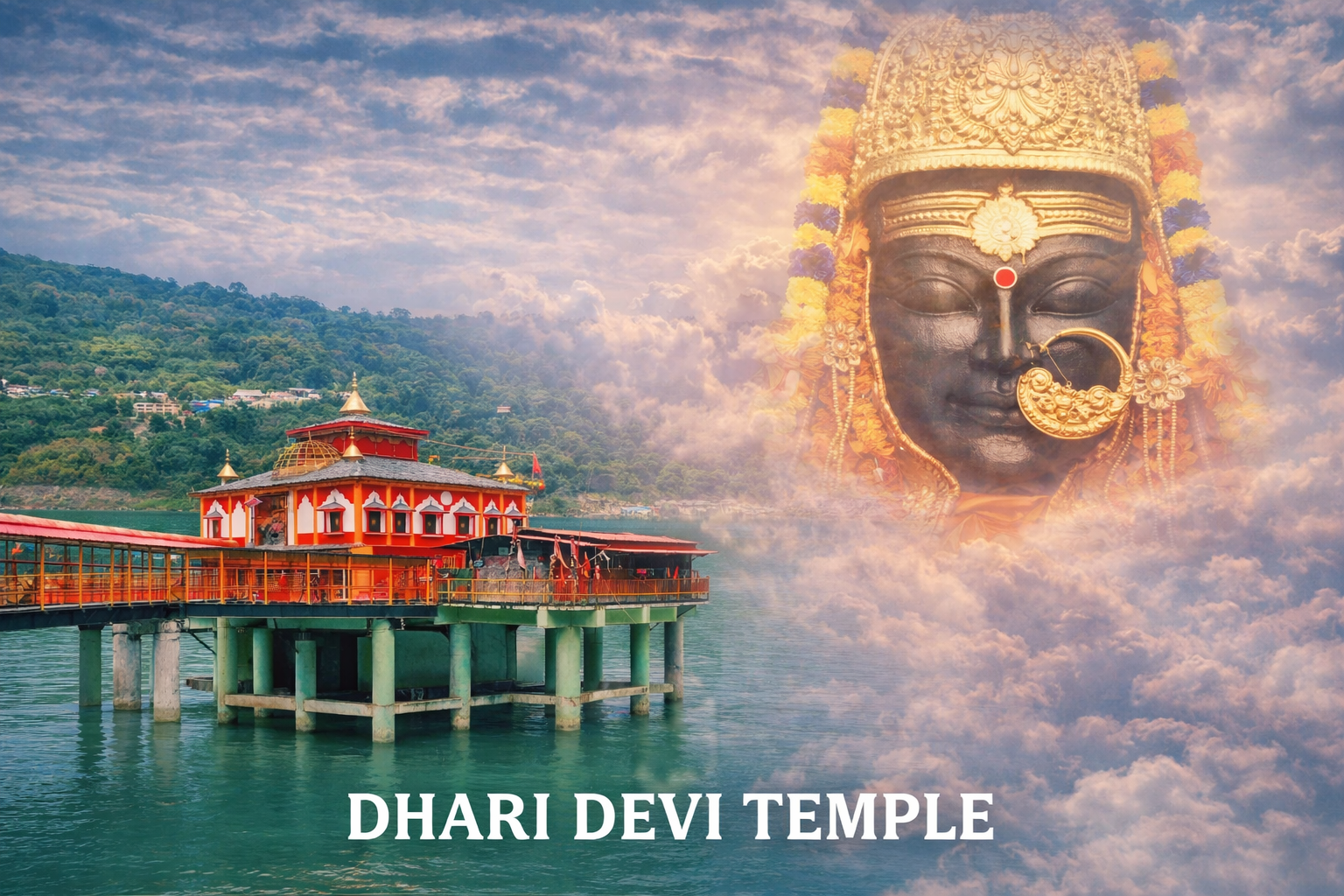
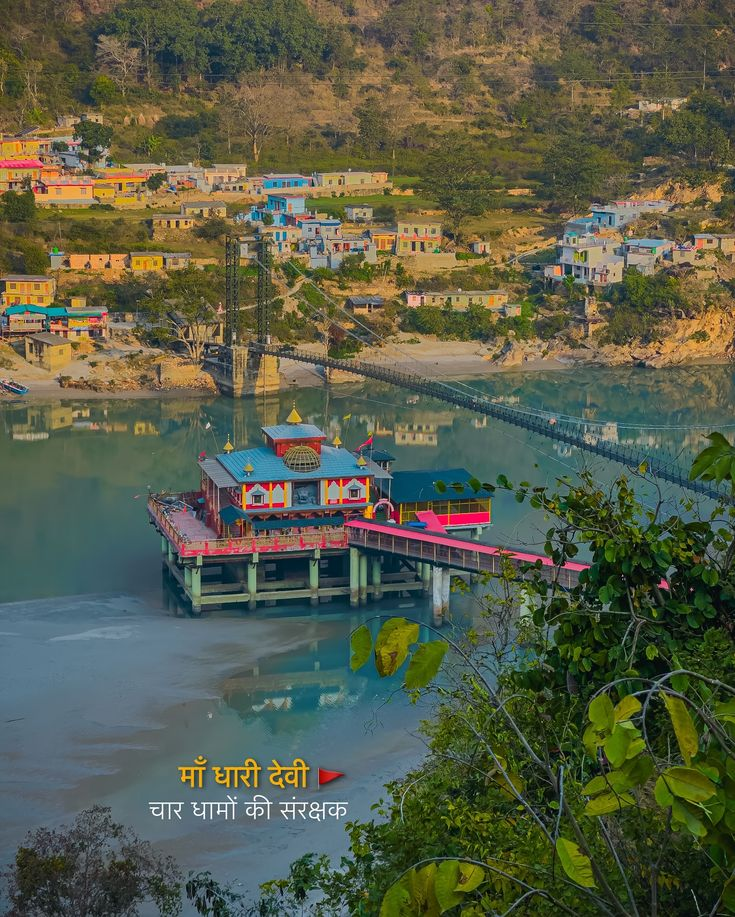
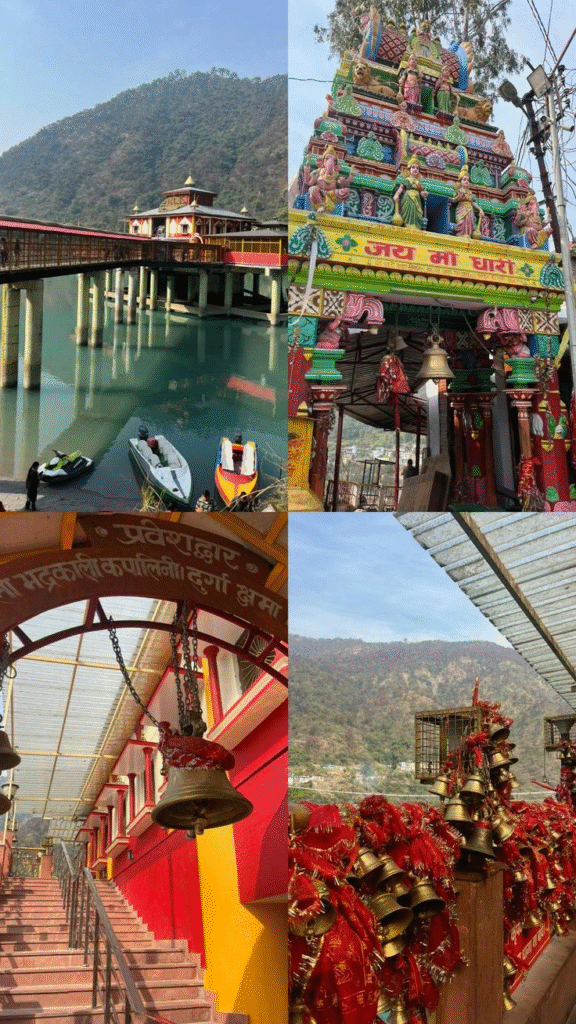
Dhari Devi Temple is one of the most powerful and mysterious temples of Uttarakhand. Located on a massive rock in the middle of the Alaknanda River, this ancient shrine is dedicated to Goddess Dhari Devi, who is worshipped as the guardian deity of Uttarakhand. Among locals, she is not just a goddess but a living force that protects the land, controls nature, and delivers justice.
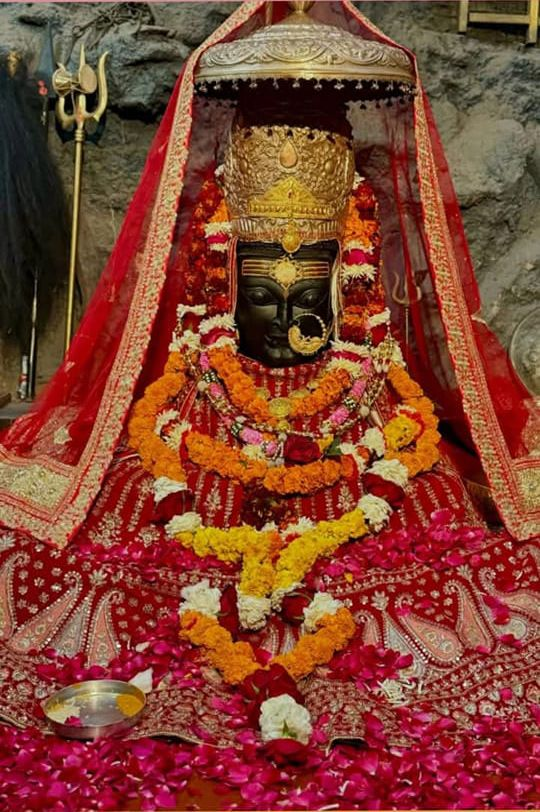
Unlike most Hindu temples, Dhari Devi Temple has no roof, and the idol represents only the upper half of the goddess. Even today, people believe that the goddess is Jagrit (awake) and reacts strongly to disrespect, disturbance, or imbalance caused by humans.
What makes Dhari Devi truly unique is her human-origin folk legend, the belief that she changes her form three times a day, and her deep connection with natural events in Uttarakhand.
Location of Dhari Devi Temple
Dhari Devi Temple is situated near Kalyasaur village, on the Srinagar–Rudraprayag highway, in the Garhwal region of Uttarakhand.
District: Rudraprayag
River: Alaknanda
Distance from Srinagar: Around 14 km
Distance from Rudraprayag: Around 20 km
The temple stands on a rock surrounded by the fast-flowing Alaknanda River, symbolizing the goddess’s control over natural forces.
Who Is Goddess Dhari Devi?
Dhari Devi is believed to be a fierce manifestation of Goddess Kali and Durga, representing raw Shakti (divine feminine energy). She is worshipped as the protector of Garhwal and the invisible guardian of Uttarakhand, especially the Char Dham Yatra routes.
Locals believe that no major journey, construction, or decision should begin without seeking Dhari Devi’s blessings.
The Original Folk Story: Dhari Devi as a Human Child
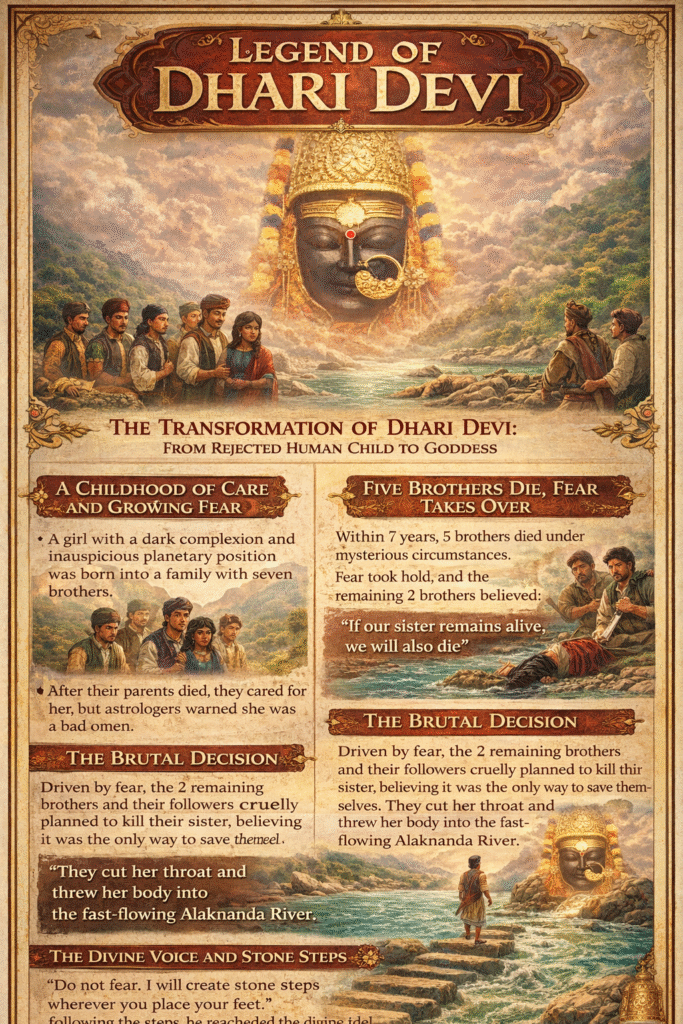
According to ancient Garhwali folklore, Dhari Devi was once a human girl born into a family with seven brothers. She loved her brothers deeply and was emotionally attached to them.
However, her brothers never truly accepted her.
There were two main reasons for this rejection:
The girl had a very dark complexion, which, due to outdated beliefs, was considered inauspicious.
Astrologers predicted that her planetary position was dangerous for her brothers, and as long as she lived, their lives would remain at risk.
A Childhood of Care and Growing Fear
After the death of their parents, the seven brothers took responsibility for raising their sister. During her early years, they took care of her, and because of this, the little girl loved her brothers unconditionally.
But as time passed, fear slowly replaced responsibility.
The belief that their sister was apshagun (a bad omen) grew stronger with each passing year.
Five Brothers Die, Fear Takes Over
Within a span of seven years, five of the seven brothers died suddenly under mysterious circumstances. These unexpected deaths terrified the remaining two brothers.
They became convinced that:
“If our sister remains alive, we will also die.”
Fear destroyed their ability to think rationally.
The Brutal Decision
The two remaining brothers, along with their followers, made a cruel decision. Believing that killing the girl was the only way to save themselves, they planned her death in secret.
One night, they cut the throat of their own sister and threw her body into the fast-flowing Alaknanda River, hoping the river would wash away their fear forever.
Instead, it marked the birth of a goddess.
The Divine Transformation in the Alaknanda River
As the girl’s body flowed downstream, her severed head became lodged against a large rock near what is now known as Dhari village.
Locals believe the head appeared as if carved from stone, glowing with divine power. From this event, the place came to be known as Dhari, and the goddess was named Dhari Devi.
The Divine Voice and the Stone Steps
According to legend, a local man once saw a young girl moving within the river. When he tried to approach her to help, the strong current made it impossible.
At that moment, a divine voice (akashvani) echoed:
“Do not be afraid. Come to me. Wherever you place your feet, I will create steps for you.”
As the man stepped forward, stone steps appeared beneath his feet, allowing him to reach the rock safely. It is believed that these steps were visible for many years in the past.
When the man reached the rock, the girl disappeared, and in her place remained the divine idol of Dhari Devi, showing only the upper half of the goddess.
Why Only the Upper Half of the Goddess Is Worshipped
It is believed that Dhari Devi herself declared that her complete form should never be revealed. If her full body were to appear, it would bring destruction.
The incomplete form symbolizes:
Controlled divine power
Balance between creation and destruction
Nature’s restraint over chaos
This belief is the reason the idol is left open to the sky, without a roof.
Belief: Dhari Devi Changes Her Form Three Times a Day
One of the strongest beliefs associated with Dhari Devi Temple is that the goddess changes her form three times every day:
Morning: A young girl, symbolizing innocence and new beginnings
Afternoon: A powerful woman, symbolizing strength and protection
Evening/Night: An old woman, symbolizing wisdom and time
This belief reinforces the idea that Dhari Devi is alive and conscious.
Dhari Devi as the Guardian of Uttarakhand
After her manifestation, Dhari Devi came to be worshipped as:
The guardian deity of Uttarakhand
The protector of pilgrims traveling to Kedarnath and Badrinath
The controller of natural balance
People believe that whenever she is disturbed, nature reacts violently.
The 2013 Uttarakhand Flood Belief
Before the devastating 2013 Uttarakhand floods, Dhari Devi’s idol was temporarily relocated due to a hydroelectric project. Locals strongly opposed this, warning that disturbing the goddess would invite disaster.
Soon after, massive floods destroyed large parts of Uttarakhand. To this day, many locals firmly believe:
“The goddess was disturbed, and the land responded.”
Temple Structure and Worship
Built on a rock in the river
Simple Garhwali structure
Photography often restricted
Navratri is the most important festival celebrated here.
Best Time to Visit Dhari Devi Temple
Best months: March to June, September to November
Avoid: Heavy monsoon season (July–August)
Conclusion
Dhari Devi Temple is not just a place of worship—it is a powerful symbol of faith, fear, justice, and nature. From a human child betrayed by her own brothers to the eternal guardian of Uttarakhand, Dhari Devi’s story reflects a deep Himalayan belief:
Divine power cannot be destroyed. It only transforms.
For the people of Uttarakhand, Dhari Devi is not merely a goddess— she is the living protector of the mountains.